Door to Door
The quieter details that shape a home.
Doors are often treated as a practical necessity and selected for pure aesthetics or cost. Yet their position, material and detailing can have a significant influence on how a home feels and functions.
For me, doors are part of the wider architectural language of an interior. They influence the way we move between spaces, how light travels through a home and whether a room feels open, connected or quietly private.
Sometimes it is not about making feature of a doorway, sometims allowing it to disappear within the sense of the rest of the room design is more beautiful.
When a door disappears
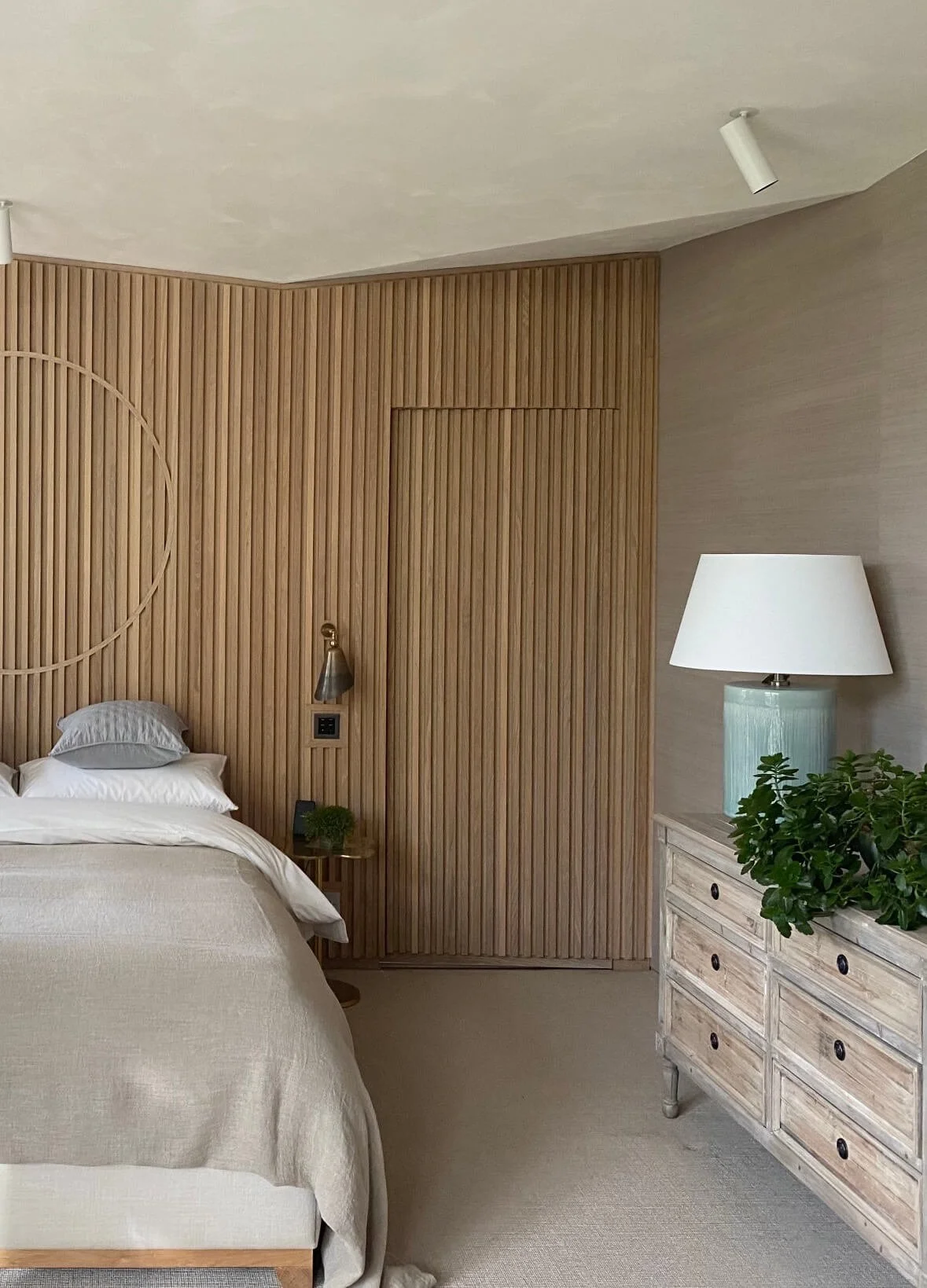
Jib doors concealed within bespoke joinery, allow a wall of cabinetry to read as a continuous composition, without the interruption of a conventional door frame. Similarly, doors covered in wallpaper can become almost invisible, allowing a space to flow uninterrupted without endless architraves or different colours.
In both instances, the success lies in details. The alignment of the pattern, the junctions between materials and the precision of the joinery all contribute to an interior that feels considered rather than complicated.
Allowing light to travel
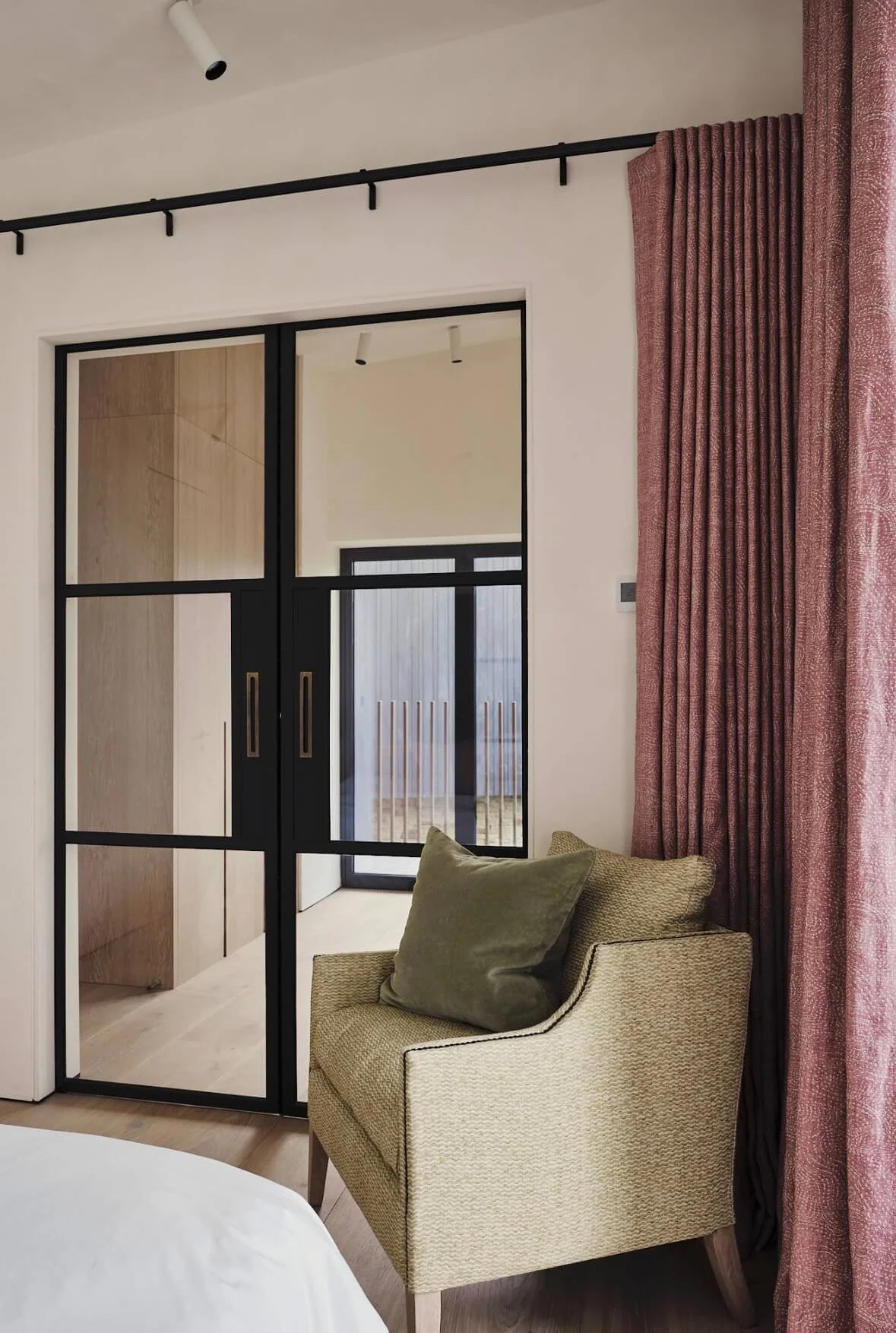
Steel and glass doors offer a different approach. Rather than concealing an opening, they celebrate the connection between spaces, allowing natural light to pass through the home while maintaining a degree of separation. Where space is limited, pocket doors can provide a practical solution, sliding neatly away when open and avoiding the swing of a conventional door. Their value lies in making a room work better without introducing unnecessary visual clutter.
Material continuity
Natural oak doors, chosen to complement the flooring, create a sense of continuity between surfaces. The timber brings the warmth or the floor alive within another seamless play on continuing surface finishes, while allowing the architecture to remain the focus. I like using matching doors and floors for pricipal rooms where privacy is required and yet the simpllicity of the matching surfaces feels so calm.
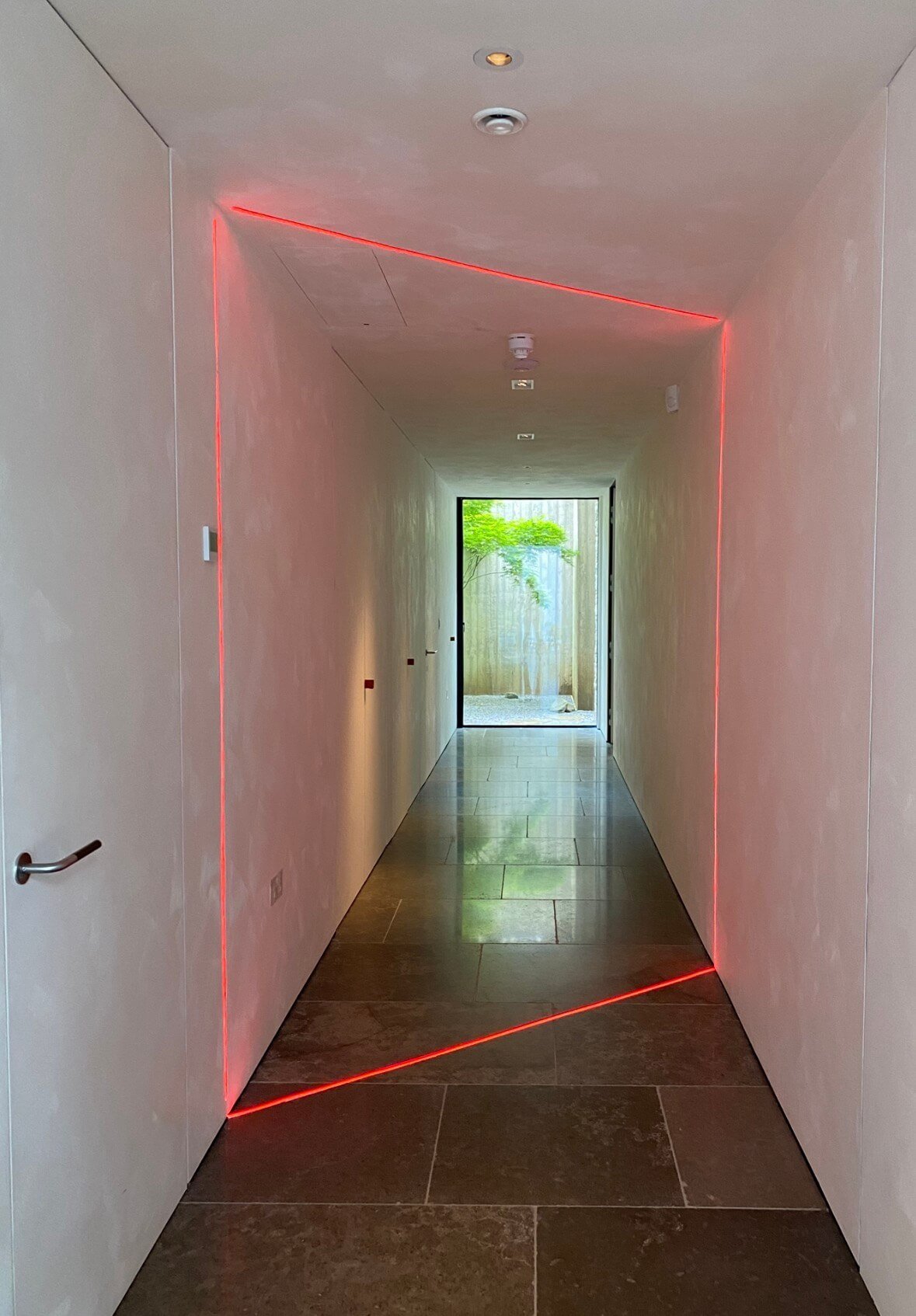
At the other end of the spectrum, a simple white wall with a concealed door can be just as effective. With minimal visual interruption, the emphasis shifts to proportion, light and the overall composition of the room or corridor.
Neither approach is inherently better. The decision depends on the character of the home, the relationship between adjoining spaces and the experience I want to create.
The details that make a difference
Good interior design is not always about adding something. Often, it is about resolving the things that would otherwise distract.
A door can become a feature, blend into the architecture or quietly connect one material to another. The important thing is that it has been considered as part of the whole, rather than as an isolated element.
These are the details that underpin natural interior design - thoughtful material choices, careful proportions, a clear understanding of how a home is used and which spaces are priority rooms.
Sometimes, the most successful design decision is the one you barely notice.